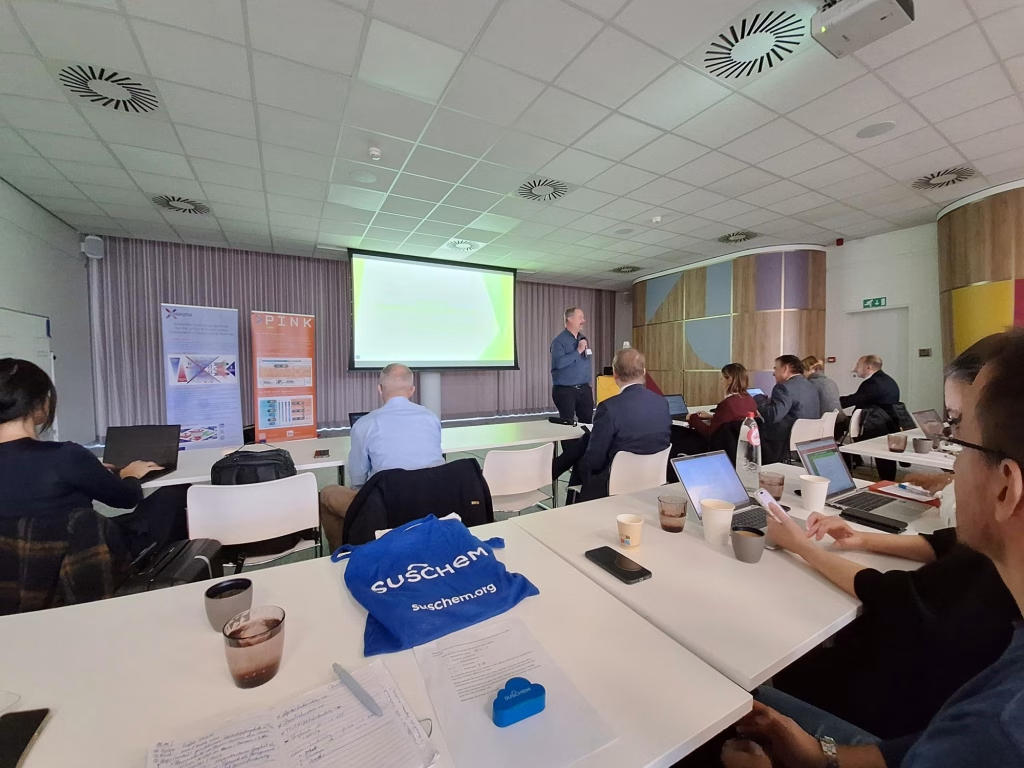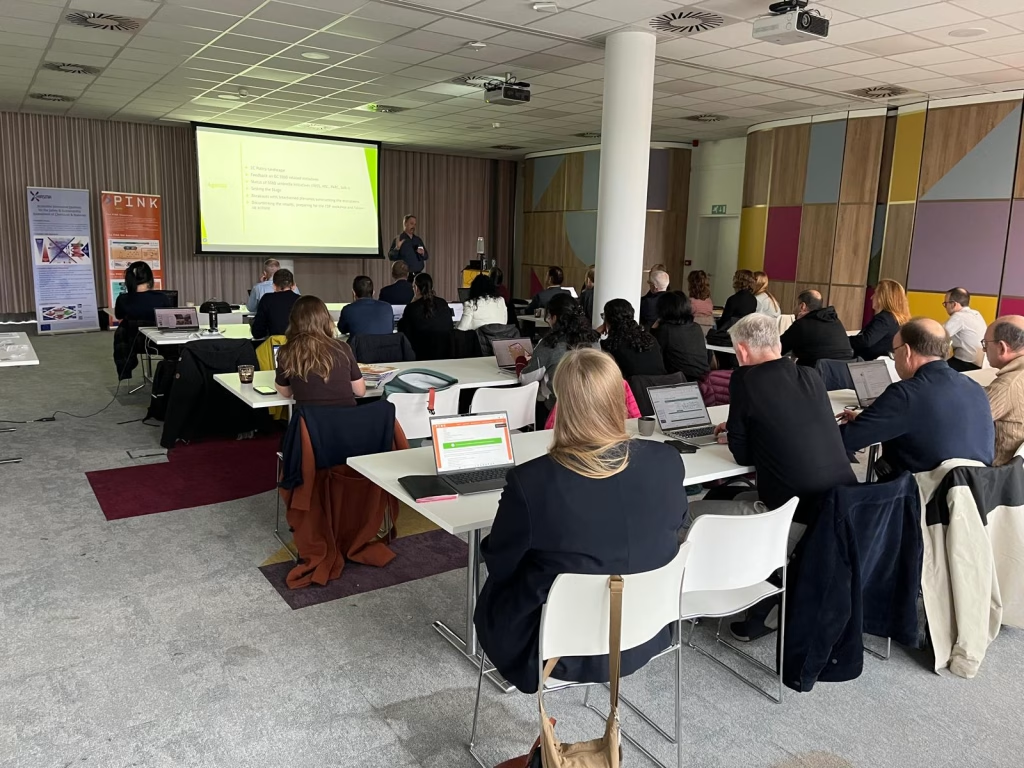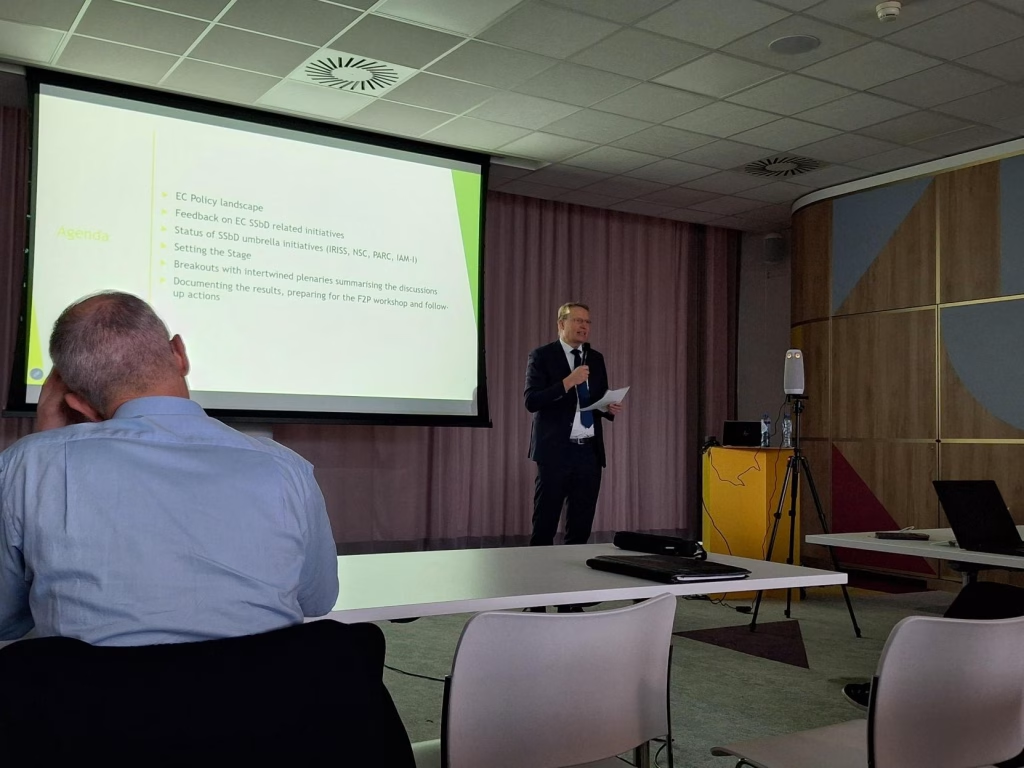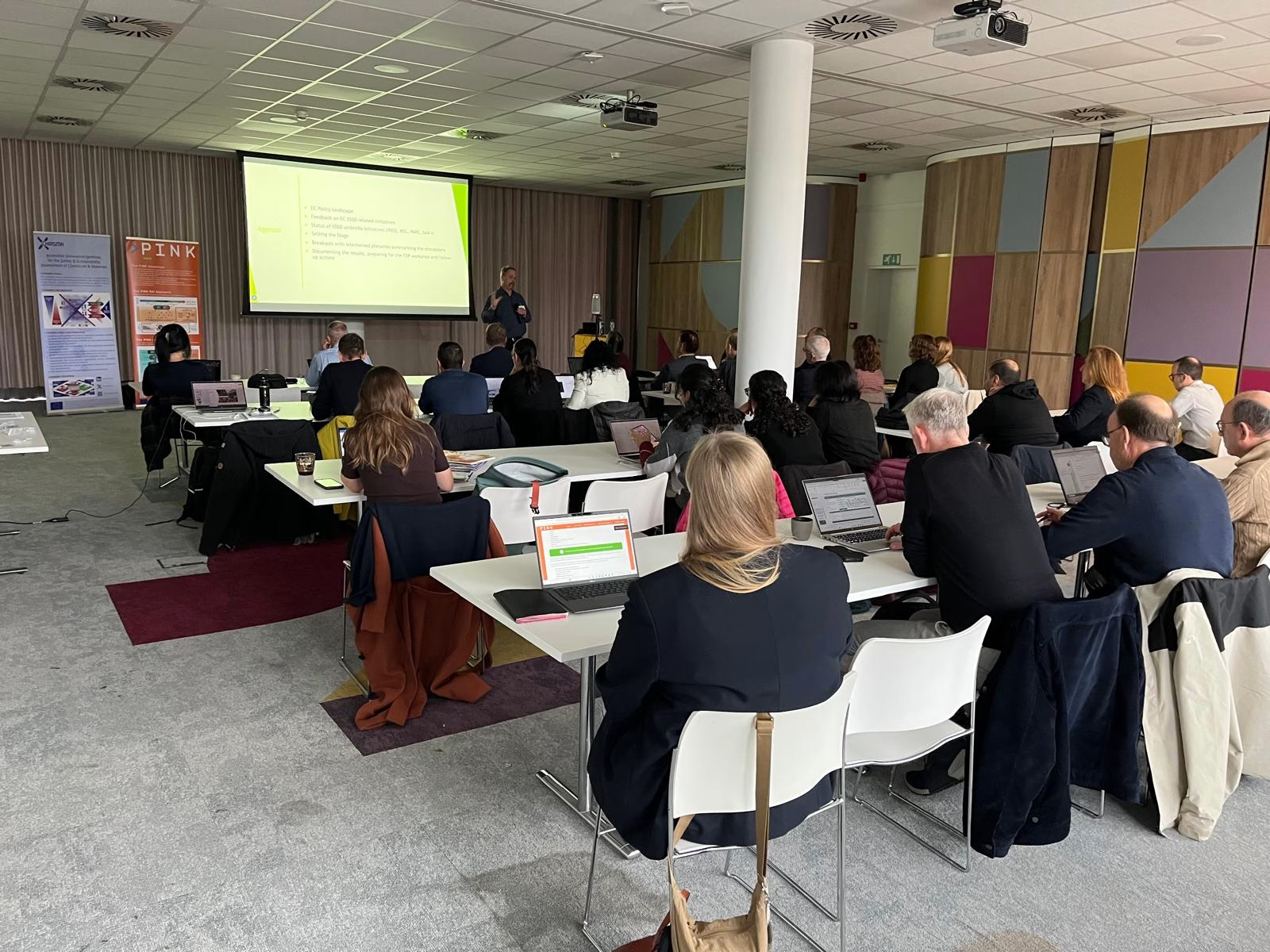
The Workshop on SSbD Project Legacy, held in Brussels on 3-4 November 2026, brought together representatives of Horizon Europe projects, European and national initiatives, policymakers, and industry stakeholders working on Safe and Sustainable by Design (SSbD). Organised as a satellite event to the European Commission’s Feedback-to-Policy Workshop, the meeting focused on how the knowledge, tools, data resources, methodologies, demonstrators, and stakeholder networks developed through SSbD projects can continue to create value beyond the lifetime of individual projects. A key initiative in that field is the NSC that brings together projects relevant for SSbD since approx. 20 years, hence, builds an important backbone for projects’ legacy.
Rather than highlighting individual project achievements, the participants explored the collective legacy of the European SSbD project portfolio and discussed mechanisms for long-term stewardship, collaboration, and strengthen the connection in the wider European advanced materials as well as chemicals ecosystem (i.e., InnoMatSyn, PARC). Key discussions addressed the identification of strategic capabilities requiring sustained support, pathways for governance and exploitation, and stronger links with initiatives such as IRISS, IAM-I, standardisation activities, and future European programmes. The workshop concluded with agreeing on a label for the collaborative core, SSbD Nexus, and that the 4 key initiatives (NSC, IRISS, PARC, IAM-I) together shall further develop a SSbD Legacy Roadmap, including concrete actions and policy recommendations to ensure lasting impact and continued collaboration across the European SSbD community. BNN participated in the workshop, at which Andreas Falk moderated the breakout group on existing and established communities (e.g., NSC, SusChem-Community, etc.), co-creating five arguments jointly developed by the audience, that have been brought to the feedback-to-policy workshop:
- Ensure continuity: Safeguard networks, knowledge and tools; involve end-users; and support long-term uptake.
- Embed SSbD in funding: Consider SSbD as a precondition for publicly funded research and innovation initiatives.
- Strengthen methods: Invest in research for SSbD assessment and test methods, including further integration of sustainability, FAIR and AI-readiness.
- Turn results into practical guidance for users: Translate project outcomes into usable guidance and explore uptake through the OECD to support operationalization of the JRC SSbD framework.
- Build the SSbD Nexus: Use functionalities of IRISS, PARC, IAM-I and NSC. Agree on alignment and governance. Connect with National Innovation Hubs and with industry, SMEs, NGOs and value chains. Support with a roadmap and action plan.
Along with the European collaboration level, also the national ecosystems have been identified as relevant interaction partners. SusChem-AT (chemicals, substitution, circularity) and ATIMA (Advanced Materials, SSbD-implementation, innovation) have been represented by Andreas Falk, to be ready to take the role as Austrian hub for SSbD, innovation, substitution and circularity.